
What is Frozen Shoulder?
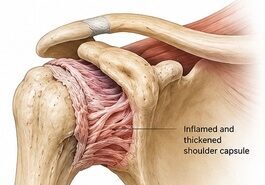
Frozen shoulder, or adhesive capsulitis, is a painful condition characterised by progressive loss of both active and passive glenohumeral joint range of motion due to inflammation, fibrosis and contracture of the shoulder joint capsule.
The condition primarily affects the rotator interval, coracohumeral ligament and axillary recess, where chronic synovial inflammation stimulates fibroblast proliferation and excessive collagen deposition. As the capsule thickens and contracts, the normal capsular volume decreases significantly, restricting glenohumeral arthrokinematics and resulting in the characteristic capsular pattern of movement loss.
Characteristic Capsular Pattern
- External Rotation (greatest restriction)
- Abduction
- Internal Rotation
- Flexion (progressively affected)
As movement becomes increasingly restricted, patients often develop compensatory scapulothoracic movement, which may contribute to secondary neck and upper back discomfort.
Clinical Presentation
Typical symptoms include:
- Deep, poorly localised shoulder pain, often referred to the lateral deltoid
- Progressive loss of both active and passive shoulder range of motion
- Night pain and inability to sleep on the affected side
- Pain at end-range movement
- Difficulty reaching overhead, behind the back or across the body
- Functional limitations with dressing, grooming, lifting and work-related tasks
Clinical examination typically demonstrates a firm capsular end-feel with reduced accessory glides, particularly inferior and posterior glenohumeral glide.
Risk Factors
Frozen shoulder affects approximately 2–5% of the general population and most commonly occurs in:
- Adults aged 40–60 years
- Females
- Patients with Diabetes Mellitus (up to five-fold increased risk)
- Thyroid disorders
- Cardiovascular disease
- Parkinson’s disease
- Following shoulder trauma or surgery
- Prolonged shoulder immobilisation
Stages of Adhesive Capsulitis
Stage 1 – Freezing (Inflammatory Phase)
Duration: 2–9 months
Synovitis and capsular inflammation produce increasing pain and progressive restriction of movement. Pain is often severe at night and with sudden movements.
Stage 2 – Frozen (Fibrotic Phase)
Duration: 4–12 months
Inflammation subsides while capsular fibrosis and contracture predominate. Stiffness becomes the primary complaint, with marked reductions in glenohumeral joint mobility.
Stage 3 – Thawing (Resolution Phase)
Duration: 6–24 months
Gradual remodelling of the joint capsule allows progressive restoration of range of motion and shoulder function. Recovery is often slow and variable between individuals.
Diagnosis
Diagnosis is primarily clinical, based on patient history and physical examination.
Key findings include:
- Progressive loss of both active and passive range of motion
- Capsular pattern of restriction
- Reduced glenohumeral accessory joint motion
- Pain reproduced at end-range movement
- Firm capsular end-feel
Imaging is generally used to exclude other shoulder pathology. Plain X-rays are often normal, while MRI may demonstrate capsular thickening, rotator interval fibrosis and thickening of the coracohumeral ligament.
Physiotherapy Management
Current evidence supports stage-specific rehabilitation, with treatment directed according to the predominant pathology.
During the Inflammatory Phase
- Pain education and activity modification
- Gentle mobility exercises
- Grade I–II joint mobilisation
- Home exercises within pain tolerance
During the Fibrotic Phase
- Progressive capsular stretching
- Grade III–IV glenohumeral mobilisation
- Posterior and inferior capsule mobilisation
- Rotator cuff and scapular stabiliser strengthening
- Functional movement retraining
Individualised rehabilitation aims to restore normal glenohumeral biomechanics while minimising compensatory movement patterns.
Prognosis
Frozen shoulder is generally considered a self-limiting condition; however, recovery may take 12–36 months. Although many patients regain functional shoulder movement, persistent stiffness can occur, particularly in individuals with diabetes. Early physiotherapy intervention can reduce pain, optimise joint mobility and improve long-term functional outcomes.
Physiodynamics
Our physiotherapists provide comprehensive assessment and evidence-based management of adhesive capsulitis using manual therapy, progressive exercise prescription and individualised rehabilitation programs designed to restore shoulder mobility, reduce pain and facilitate a safe return to work, sport and everyday activities.