
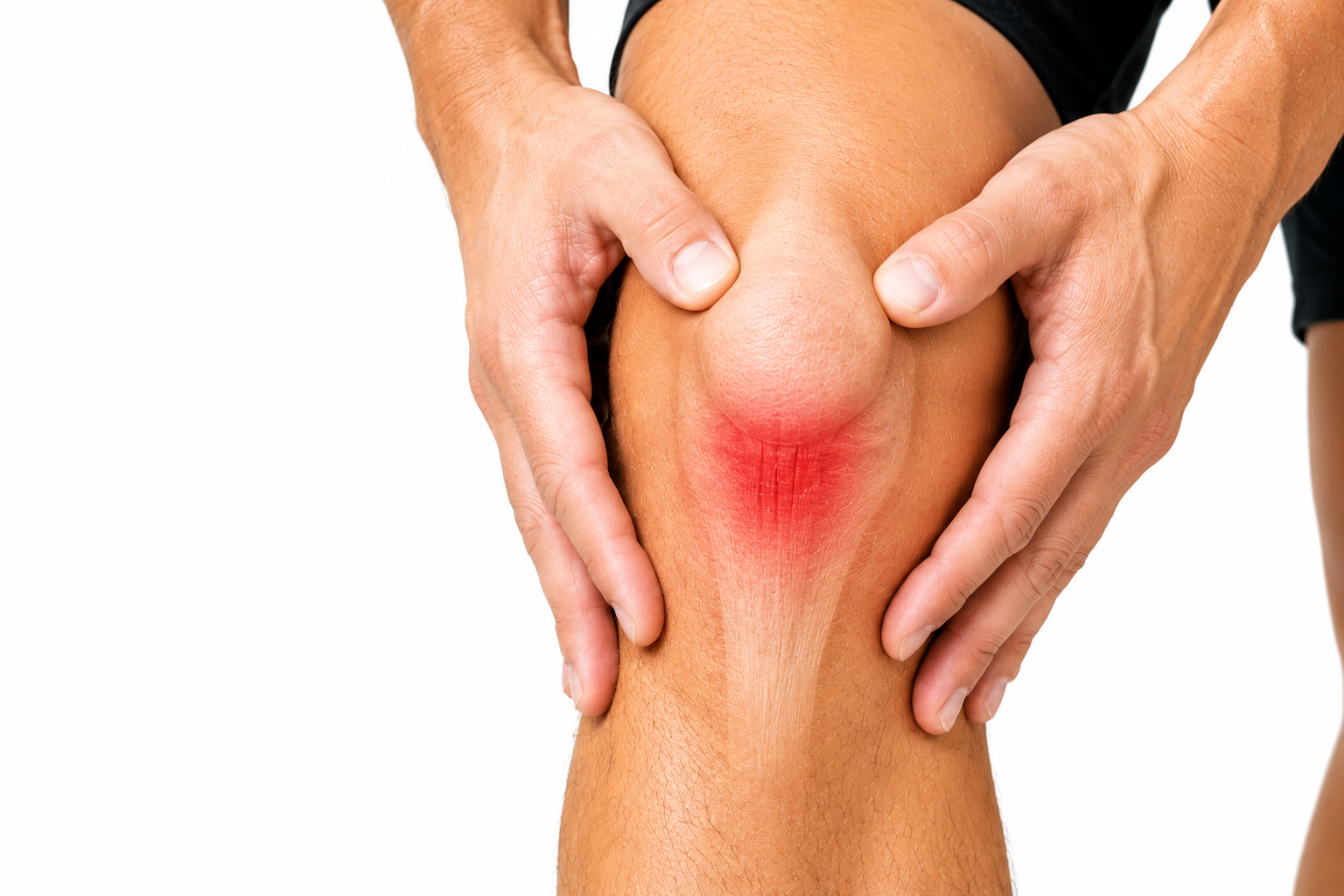
What is Patella Tendinopathy?
Patella tendinopathy is an overuse injury affecting the patellar tendon, which connects the kneecap (patella) to the shinbone (tibia). Repetitive jumping, running, squatting and rapid changes in direction can overload the tendon, causing pain and reduced function.
Unlike a tear, patella tendinopathy involves degeneration and disorganisation of tendon fibres rather than acute inflammation.
Common Symptoms
- Pain just below the kneecap
- Tenderness over the patellar tendon
- Pain during jumping, running or squatting
- Morning stiffness
- Pain when using stairs
- Reduced sporting performance
- Symptoms that improve with warming up but return afterwards
Stages of Patella Tendinopathy
Reactive Tendinopathy (Early)
- Pain after heavy activity
- Mild tendon thickening
- Minimal loss of function
- Recovery: 2-6 weeks
Tendon Dysrepair
- Pain during and after activity
- Increased tendon thickening
- Reduced ability to tolerate loading
- Recovery: 6-12 weeks
Degenerative Tendinopathy
- Persistent pain
- Significant tendon degeneration
- Reduced strength and power
- Recovery: 3-12 months
Why Physiotherapy is Important
Continuing to train through tendon pain often worsens symptoms. Complete rest is also rarely the answer.
The best evidence supports progressive tendon loading, allowing the tendon to adapt and regain strength while carefully managing pain and activity levels.
How Physiodynamics Can Help
Our physiotherapists will:
✓ Assess your tendon and knee mechanics
✓ Identify training and loading errors
✓ Reduce pain
✓ Improve lower limb strength
✓ Restore tendon capacity
✓ Improve jumping and landing mechanics
✓ Develop an individualised rehabilitation program
✓ Guide your safe return to sport
Treatment May Include
- Progressive strengthening program
- Heavy slow resistance training
- Isometric pain-relieving exercises
- Load management
- Manual therapy where appropriate
- Hip and calf strengthening
- Running and jumping retraining
- Return-to-sport planning
Common Risk Factors
- Jumping sports (basketball, volleyball)
- Running sports
- Rapid increases in training load
- Poor lower limb strength
- Reduced ankle mobility
- Tight quadriceps and calf muscles
- Previous tendon injuries
When Should You See a Physiotherapist?
Book an appointment if you have:
- Pain below the kneecap lasting more than two weeks
- Pain during jumping or running
- Ongoing stiffness
- Pain affecting work or sport
- Difficulty returning to activity
- Recurrent tendon pain
Don’t Ignore Knee Tendon Pain
Early treatment and a structured strengthening program can significantly improve recovery and reduce the risk of long-term tendon problems.