
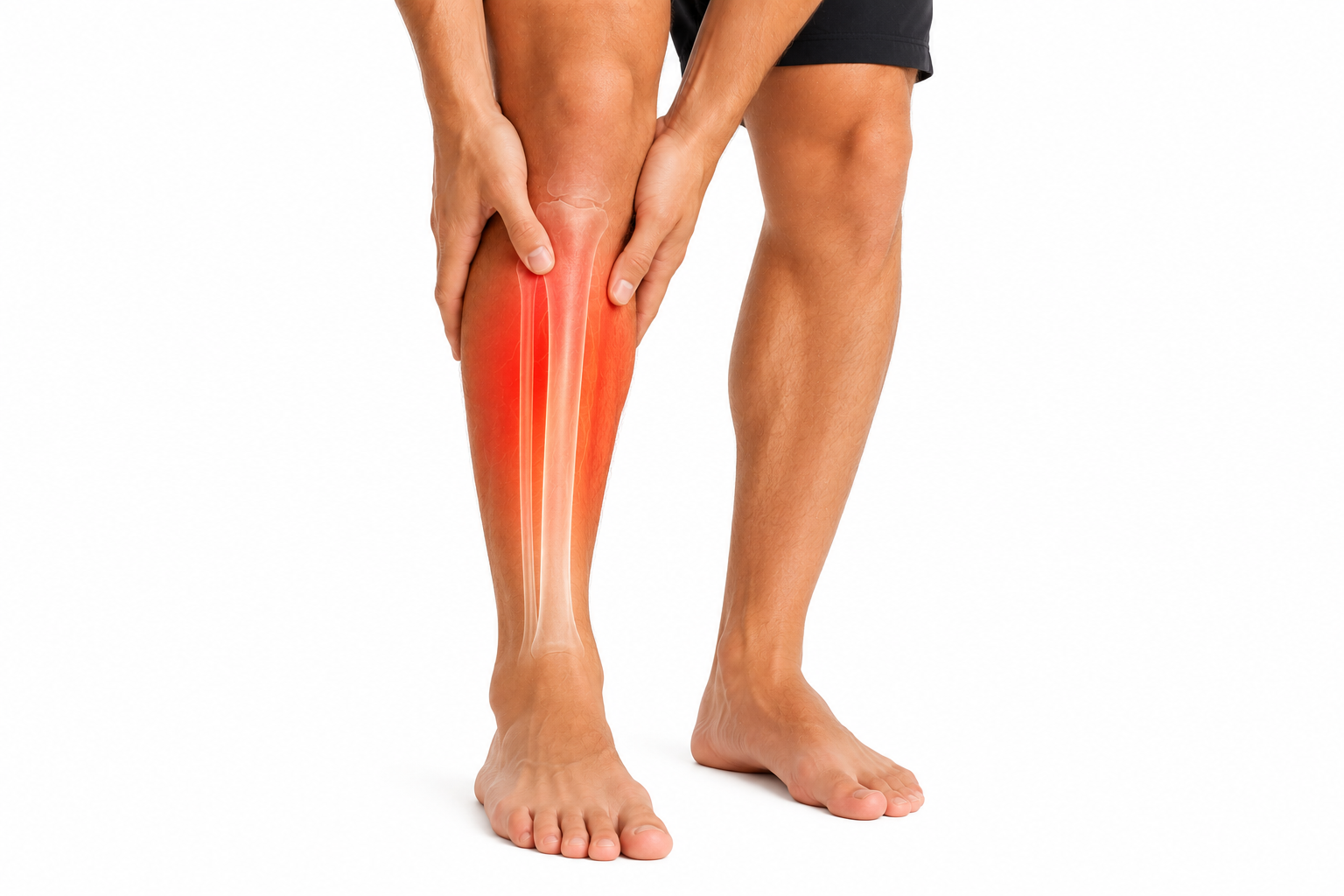
What are Shin Splints?
Shin splints, medically known as Medial Tibial Stress Syndrome (MTSS), are one of the most common overuse injuries affecting runners, walkers and active individuals. The condition develops when repeated loading places excessive stress on the muscles, tendons and bone along the inner border of the tibia (shin bone).
Without appropriate treatment, shin splints can progress to a tibial stress reaction or stress fracture.
Common Symptoms
- Pain along the inside of the shin
- Tenderness over the tibia
- Pain during or after running
- Discomfort when walking or jumping
- Mild swelling along the shin
- Tight calf muscles
- Symptoms that improve with rest but return with activity
Stages of Shin Splints
Early Stage
- Pain after exercise only
- Mild tenderness
- Able to continue activity
- Recovery: 2–4 weeks
Moderate Stage
- Pain during and after exercise
- Reduced running tolerance
- Increasing tenderness
- Recovery: 4–8 weeks
Advanced Stage
- Persistent pain
- Pain with walking or daily activities
- Possible stress reaction or stress fracture
- Recovery: 8–16+ weeks
Why Physiotherapy is Important
Ignoring shin pain often allows the injury to worsen. Early assessment helps identify contributing factors such as training errors, muscle weakness, footwear or biomechanical issues.
Evidence-based rehabilitation focuses on reducing load while progressively rebuilding tissue capacity.
How Physiodynamics Can Help
Our physiotherapists will:
✓ Assess the cause of your shin pain
✓ Rule out stress fractures
✓ Reduce pain and irritation
✓ Improve lower limb strength
✓ Correct running mechanics
✓ Improve ankle mobility
✓ Develop a gradual return-to-running program
✓ Reduce the risk of recurrence
Treatment May Include
- Individualised strengthening program
- Running gait assessment
- Load management
- Calf and lower limb strengthening
- Footwear advice
- Manual therapy
- Mobility exercises
- Return-to-sport rehabilitation
Common Risk Factors
- Rapid increase in running or training
- Poor footwear
- Hard running surfaces
- Reduced calf strength
- Flat feet or altered foot mechanics
- Limited ankle mobility
- Previous shin splints
- Poor training recovery
When Should You See a Physiotherapist?
Book an appointment if you have:
- Pain lasting more than one week
- Pain during running or walking
- Localised tenderness along the shin
- Recurrent shin pain
- Difficulty returning to exercise
- Pain that continues despite rest
Seek Medical Review If You Experience:
- Severe localised bone pain
- Pain at rest or during the night
- Inability to weight bear
- Significant swelling after trauma
Don’t Ignore Shin Pain
Early treatment and a structured rehabilitation program can help you recover faster, prevent stress fractures and get you back to running with confidence.